Cull
They don't kill you. They just stop letting you matter

Reader Discretion Advised: This story contains themes of isolation, psychological tension, systemic control, and implied violence. It explores unsettling societal structures and survival under oppressive conditions. Not suitable for readers sensitive to dystopian settings, child labor, or moral ambiguity.
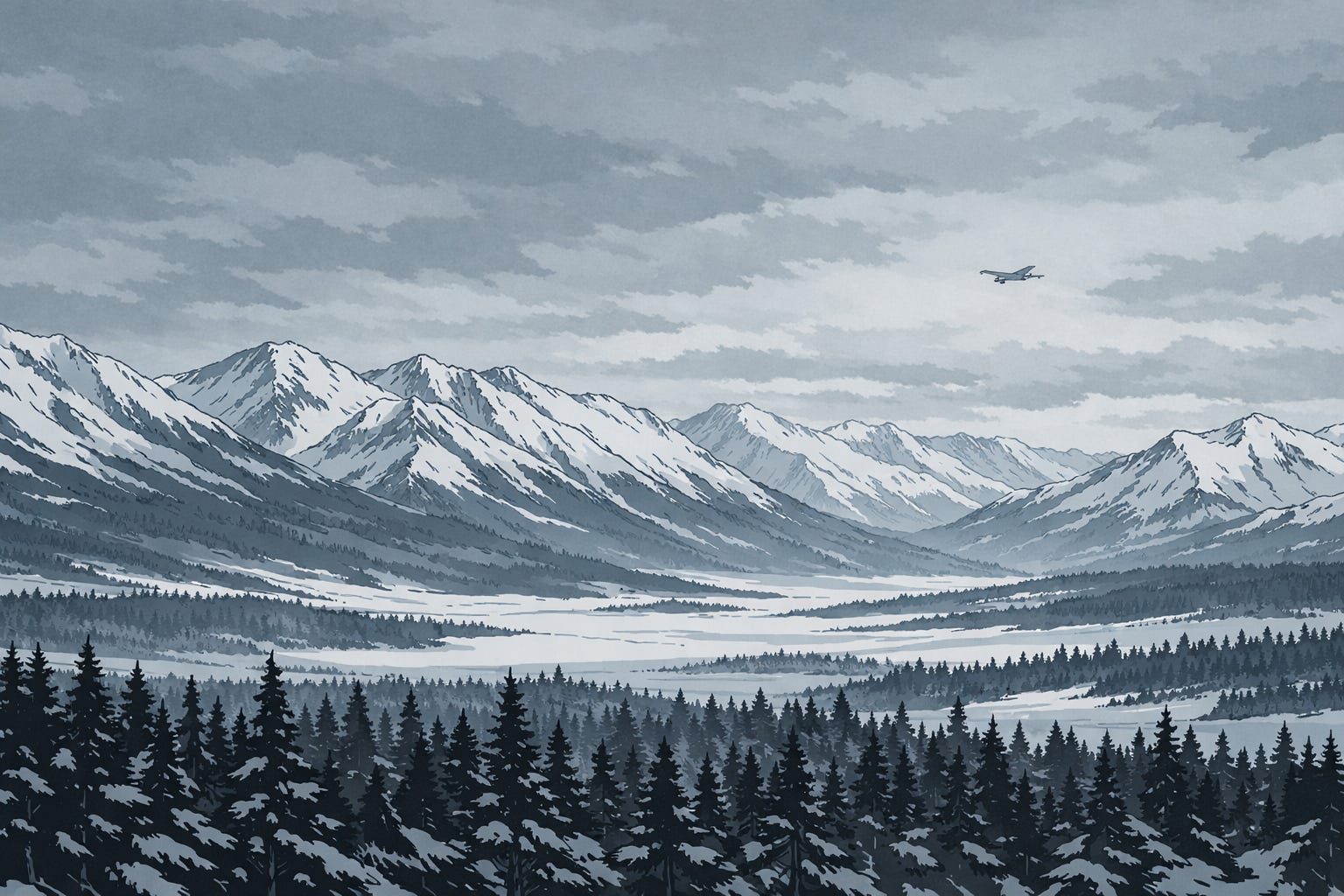
An endless expanse of white and dark timber stretched beneath the sky. Mountains cut through the horizon, and wind moved across the surface in long, invisible currents. There were no roads, no structures, no sound but the wind. A small plane sliced through the sky.
Inside, the plane was minimal and functional. Sheena sat by the window, still and focused. Not anxious. Not excited. Just watching. Outside, there was nothing but distance.
The plane banked slightly. Through the glass, a break in the trees revealed a small settlement below, sparse and ordered, too small for the amount of land around it. She took it in without reacting.
The plane landed on a narrow strip carved into the snow. The engines wound down, and silence rushed back in. The door opened, and cold air hit immediately.
She stepped down, her boots crunching into packed snow. She carried one pack, as the pilot unloaded her tote of luggage.
A man stood nearby, waiting with his hands in his pockets.
“You the teacher?” he asked.
“Yeah,” she said.
He nodded once. That was enough. No handshake.
“Well, welcome to Northvale.”
He turned and started walking, wheeling her luggage behind him. She followed.
The town was made up of a handful of buildings, spread out with practical spacing. Smoke rose from a few chimneys, straight up, with no wind at ground level. People moved with purpose. A woman carried wood. A man repaired something without looking up. No one stopped what they were doing.
A couple glanced at her, smiled, and waved. She noticed and waved back.
They passed two men mid-conversation. The conversation stopped as she approached. Both men smiled politely as she passed. The conversation did not resume.
A small cabin sat on the edge of town, separate but not far. The man gestured to it.
“You’re here,” he said.
She nodded.
He lingered for a second, like he might say something else.
“Hope you like the cold.”
“Mountaineering is my hobby,” she said.
“Just south of here you have the White Mountains. It’s beautiful up there. Just pack to stay warm.”
He let go of her luggage, turned, and walked away.
She watched him go, then turned to the cabin. She stepped up to the door and went inside.
The interior was simple, clean, bare essentials. A table, a bed, and a wood stove. Nothing extra. A small kitchenette sat at the far wall.
She stepped in and set her pack down. She moved through the space, checking it without touching much, assessing.
She found an envelope on the table with her name on it. She opened it.
Inside was a printed contract.
She flipped through it. Dense. Formal.
Her eyes slowed slightly at a section.
“NON-INTERFERENCE WITH COMMUNITY OPERATIONS…”
“MAINTAINING STABILITY…”
“FAILURE TO COMPLY…”
She scanned it, not alarmed, just noting. She set it down.
Silence filled the room again.
Outside, faint movement, distant and indistinct. She looked toward the window.
Nothing there. Just trees. Still.
She turned away, unbothered. For now.
Part 2
Cold air hung still around the cabin. The morning was quiet in that way that felt settled rather than peaceful.
Sheena stepped outside, adjusted her jacket against the chill, and started toward town without hesitation.
Inside the schoolhouse, the space was small and functional. Thirteen desks. Thirteen students. All of them were already seated. All of them were already looking at her.
Sheena stepped in and paused briefly, taking in the room.
“Good morning Class,” she said. “I am Ms. James.”
A few of them responded. Polite. Controlled.
She set her things down and looked over the room more carefully. No one fidgeted. No one whispered. They just waited.
On her desk sat an apple and a small card. Sheena picked it up and read it.
“Welcome.”
There was no name.
She set it back down. Something about it didn’t sit right, though she couldn’t place why.
She turned to the board and wrote:
INTRODUCTION
“I would like to see what you as a class are already at,” she started.
Then she faced them again.
“Let’s start with simple geography,” she said. “Where are we?”
A boy raised his hand immediately. Too quickly.
She nodded to him.
“Northvale,” he said.
She gave a small smile. “Right. And where is Northvale?”
A pause.
“Alaska,” another kid said.
“And what country is that in?”
Silence.
Not confusion. Just no response.
Sheena studied them, then said, “We’re part of the United States.”
No reaction.
She glanced around the room. There was a flag on the wall. Alaska. Nothing else.
She let that settle before turning back to her desk.
She flipped through the curriculum binder. Math. Reading. Basic science. She kept flipping.
Then she stopped.
There was nothing else.
She looked up again. “You don’t do geography?”
They stared back at her, blank.
A girl tilted her head slightly. “What’s geography?”
Sheena paused, adjusting her approach. “Learning about places. Outside here.”
“We don’t need that,” one of the kids said.
A couple of the others nodded. It wasn’t disagreement. It was consensus.
Sheena watched them for a moment.
Later, she tried again.
“What do you want to do when you’re older?”
“I work with my dad,” a boy said.
“Doing what?”
“Timber.”
Sheena held his gaze. “Is that what you want?”
“It’s what we do.”
No hesitation.
Sheena looked around the room. No one disagreed. No one added anything. Just quiet agreement.
A stillness settled over the space. Clean, yet unsettling.
Sheena nodded once, processing it without reacting yet.
After class, Sheena took a walk through the woods behind her cabin. Snow crunched under her boots as she walked. The space between the trees was open, easy to navigate. She moved comfortably, confidently. This was familiar terrain.
Tall trees, wide spacing, clean lines of sight. The kind of woods that felt manageable.
Ahead, something broke the pattern.
She slowed, not out of caution, just noticing.
Through the trees, a fence came into view. Low, wooden, practical. Not decorative.
She stepped closer and pushed the simple gate open. It creaked slightly.
Inside was a cemetery.
Graves were arranged in neat rows. Markers were uniform. Simple wood and stone. Names carved. Dates. Nothing elaborate. Nothing wasted.
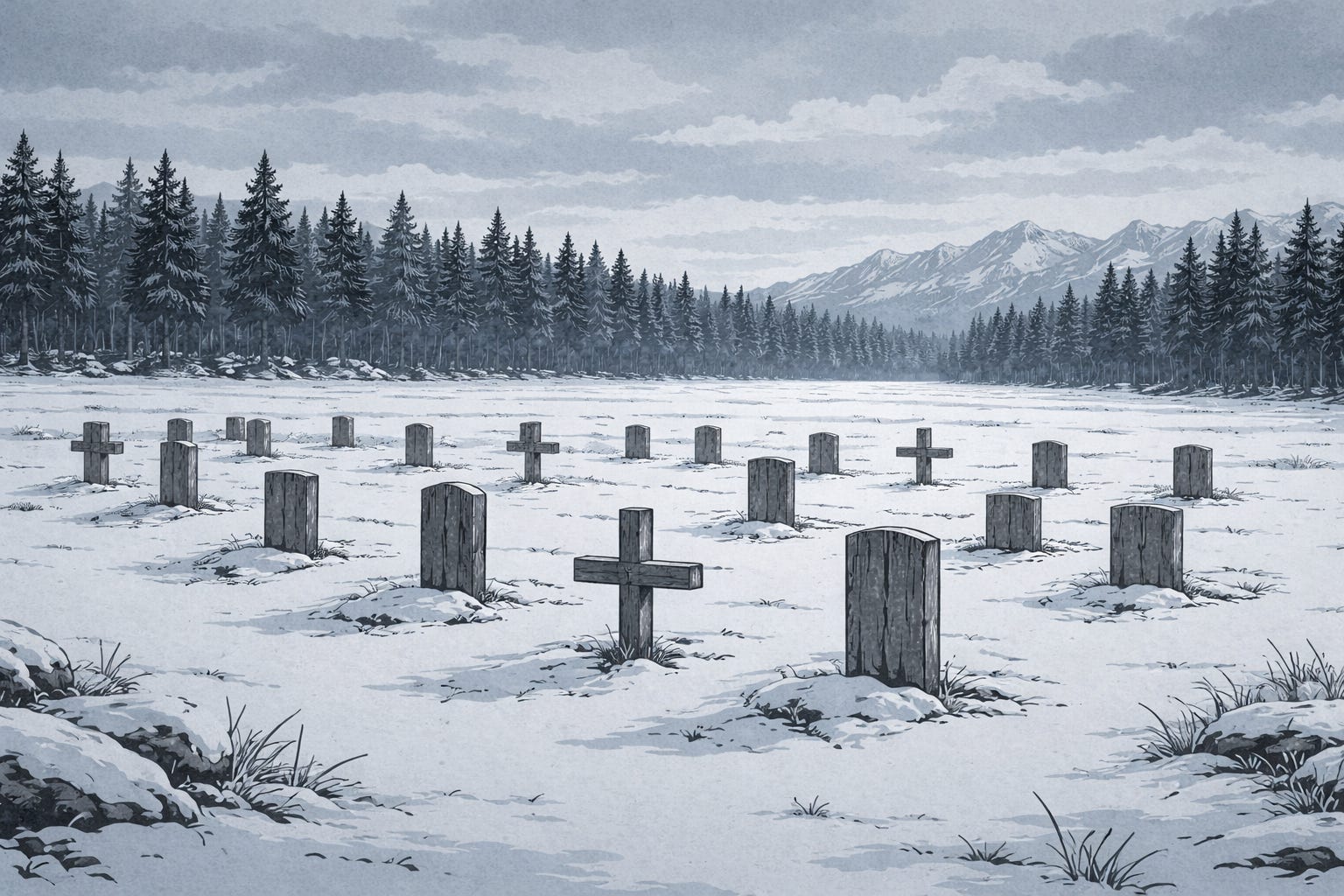
Sheena moved between them, reading as she passed.
Most of the lifespans were short. Some longer. No clear pattern.
She crouched at one grave and ran a gloved hand over the carving. It was maintained. Someone took care of this place.
She stood and looked around again. Everything here was ordered. Intentional. Accounted for.
Then she noticed it.
At the far edge, beyond the last clean row, something shifted.
Sheena walked toward it.
The snow was more uneven there, less traveled. The fence didn’t continue. It simply stopped.
Beyond it was a cluster.
Unarranged. Unmeasured.
Markers made from rough wood. Some leaning. Some fallen. A few nothing more than sticks pushed into the ground. Small stone Cairns.
There was no uniformity. No maintenance.
She slowed as she moved through them, reading what she could. Some names were barely legible. Others were completely worn away.
One marker stood out. It was too small.
Sheena stopped in front of it and looked down.
There was no readable date. Just a small shape beneath the snow.
Wind moved softly through the trees. It felt quieter here. Muted.
Sheena glanced back over her shoulder at the maintained graves. Ordered. Recognized.
Then she looked back at this.
Unmarked. Unkept. Unaccounted for.
The separation between the two areas was clean. Deliberate.
Not neglect. A decision. Everything felt surreal.
She stood there, trying to make sense of it. Not fully understanding but feeling the weight of it.
Somewhere deeper in the woods, branches shifted. Something moved.
She looked up and listened. Nothing clear. Just enough.
She straightened, gave the small marker one last look, then turned and walked back toward the maintained side.
She didn’t linger. She exited through the gate and returned to the woods. Her pace was steady again. But not as relaxed.
Her awareness had sharpened. The woods hadn’t changed.
But they did not feel neutral anymore.
She stopped.
A shape stood ahead.
A moose. Large. Still. Watching her.
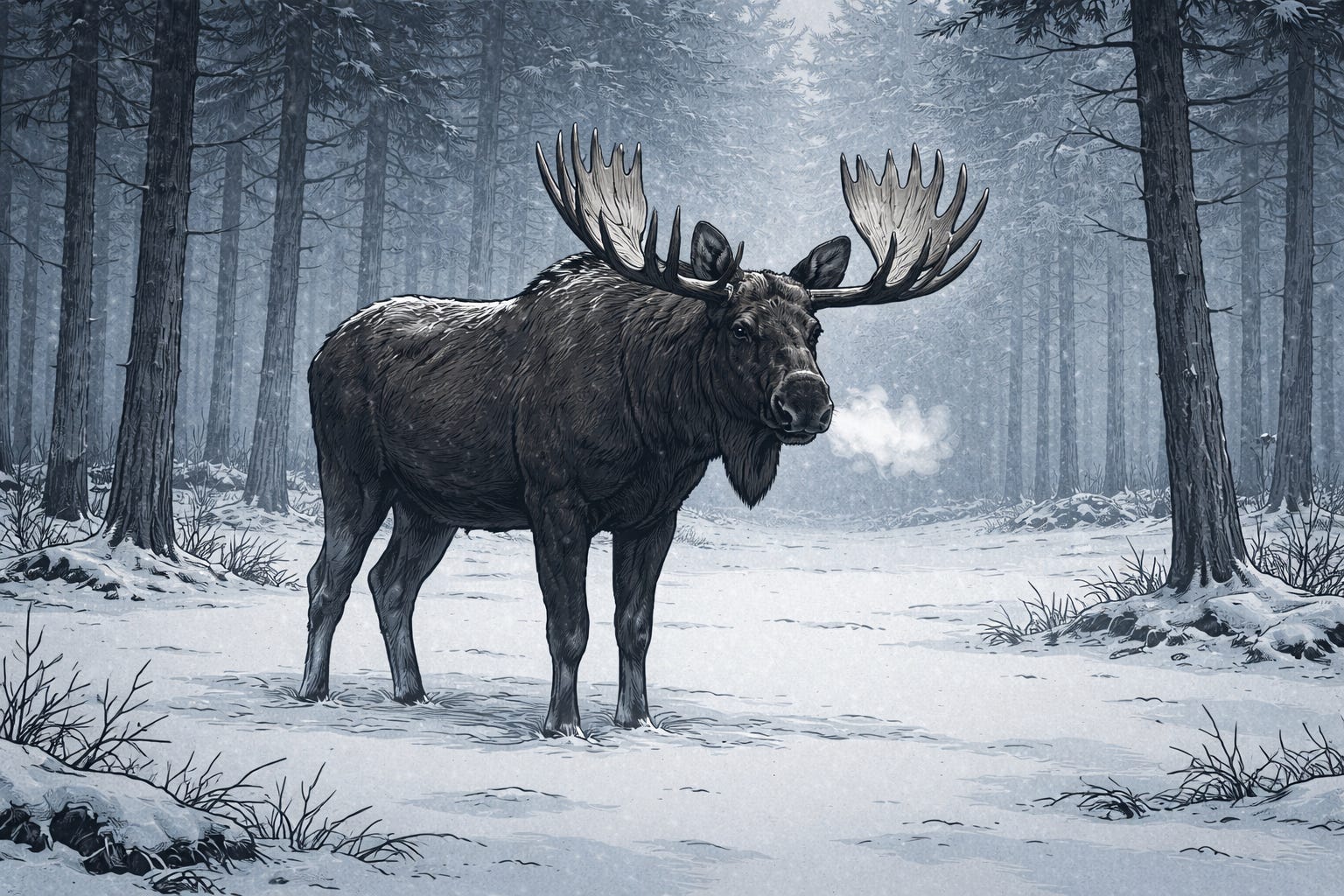
She stepped back slowly.
The moose stepped forward.
That was enough.
She turned and moved quickly, controlled, not panicked. The moose followed, faster than expected.
She spotted a tree, grabbed a branch, and pulled herself up. Her boot slipped once, she recovered, and climbed higher.
The moose reached the base, stopped, looked up, and snorted.
Time passed slower than usual. Heightened by the adrenaline.
The wind shifted. Snow drifted lightly.
She stayed in the tree, breathing controlled, watching, waiting. The moose did not leave. It circled the tree.
Her grip tightened slightly. Cold began to settle into her fingers.
The woods offering no signs of help, just stillness. Too much stillness.
A faint sound cut through it, a whistle through the trees.
An arrow punched into the moose.
It jerked, stumbled. The animal dropped. Heavy. Final. Only, the silence had returned.
The moose lay still. Steam lifted faintly from its body.
She clung to the tree, breathing hard, not panicking anymore, but not trusting it either.
Footsteps. Measured. Unhurried. She turned toward the sound.
A man stepped into view, bow in hand. Rugged. Eyepatch. Calm.
He looked at the moose, then up at her.
“You can come down now,” he said.
She didn’t move yet, still reading the situation.
“Is it—” she started.
“Yeah,” he said.
She exhaled and carefully climbed down. Snow crunching as her boot hit the ground.
She kept her distance from the animal, looked at it, then at him.
“Thanks,” she said.
“Mm.”
He stepped past her and checked the moose. He placed a hand on it and gave it a small push with his boot, confirming. Nothing ceremonial. Just work.
“I didn’t think it would stay that long,” she said.
“They don’t like being watched.” The man replied, calmly.
That landed.
She glanced back at the tree.
“You just… out here?” she asked.
“I was hunting.”
Simple. No follow-up.
He stood and looked over the animal again, already thinking ahead.
“This’ll feed most of the town,” he said.
She looked at the moose. Different now. Not threat. Resource.
“I’ve never had moose,” she said.
“You will.”
He studied her.
“You’re the new teacher,” he said.
“Yeah.”
“Figured.”
He gestured slightly with his chin.
“You heading back?” he asked.
“Yeah, I probably should after that.”
“I’ll walk with you,” He said with a hint of a smile.
Not protective. Just efficient.
She nodded.
They started moving, leaving the moose behind.
“I’ll come back with a sled for the meat,” he said.
“You doing that alone?” she asked.
“I won’t be.”
They walked in silence.
“I’m Sheena,” she said.
“Russ.”
That was enough.
They kept moving.
They moved through the trees. He walked like he already knew the ground. She kept pace without struggle.
“Town always this quiet?” she asked.
“Mostly.”
“People don’t talk much.”
“They do,” He started. “Just not when there’s nothing to say.”
She considered that.
“Still figuring out what counts as useful around here.” Sheena said quietly.
“You will.”
Not reassurance. Just fact.
They kept walking.
The town came into view. People were working. No one watched them. No one waited.
He slowed slightly.
“Kids’ll listen,” he said. “Long as you don’t try to change anything.”
She glanced at him, measuring. “Not planning to.”
“Good.”
That was it.
They walked until her cabin came into view.
They stopped.
He looked past it toward the woods behind, mapping, then back to her.
“I’ll bring some by,” he said.
“Alright.”
He nodded once, turned, and headed back the way they came. No goodbye. She watched him go, then looked at the woods, then her cabin. She stepped up to the door and went inside.
Light was fading by the time a quiet knock sounded at the door. She looked up from inside, then moved to it and opened it. No one was there. Just the empty yard. Trees. Stillness.
Then she saw it.
A metal plate sat on the ground just outside the door.
On it was a cut of raw moose, clean and fresh, wrapped loosely in paper. A folded piece of paper rested beside it.
She looked out again. Nothing.
She crouched, picked up the plate, and brought it inside. She set it on the table and unfolded the paper. Handwritten. Simple.
“Pot roast. Low heat. Long cook.”
A short list of ingredients. No measurements. No instructions beyond that.
She read it once and let out a small exhale. She observed her still empty kitchen cabinets.
The general store was small and functional, shelves stocked with necessity, not variety. Canned goods, root vegetables, dry staples. No clutter. No indulgence.
The bell above the door chimed as she entered.
A few people stood inside, quiet and purposeful. No one lingered.
She grabbed a small basket and moved aisle to aisle, carrots, potatoes, onion. She checked quality out of habit. Everything was acceptable. Nothing more.
“Ms. James!”
She turned.
One of her students stood there, the girl from the front row, bright-eyed and still. Sydney. Beside her stood her mother, neutral expression, watching.
She softened slightly. “Hey. Didn’t expect to see you out here,” she said.
The girl stepped closer, controlled excitement.
“You’ve been doing really well in class,” Sheena said warmly.
The girl lit up slightly.
“She does what’s expected,” her mother said, cutting in smoothly.
The girl’s expression flattened. Not crushed. Just corrected. Sheena noticed it.
“Still. She’s sharp.”
“She contributes,” Her mother said flatly.
The word landed clean and final.
The girl nodded once, accepted it. No pride. No disappointment. Just conformity.
The mother studied Sheena a moment longer than was comfortable.
“I’ll see you tomorrow,” she said.
“Yes, Ms. James.”
They moved on efficiently. No lingering goodbye. She watched them go, then looked back to her basket and continued shopping.
At checkout, a single old manual register stood. An older man scanned items, calm, friendly but measured.
“You settling in alright?” he asked.
“Yeah. Still figuring things out.”
“Takes a minute,” he began. “People here just like to keep things… simple.”
He bagged the vegetables.
“Conversations don’t run too long.”
He gave a small, polite smile, not unkind, just informative.
She nodded.
“I’ve noticed.”
“You’ll get used to it,” he said. “Or you won’t.”
He slid the bag toward her. No weight behind the statement. Just fact.
She paid and took it.
“Thanks.” She turned to leave. The bell chimed as the door opened. No one watched her go.
Back at her cabin the stove burned low. A pot sat over the heat, steam lifting slowly from the lid.
She moved around the space with quiet efficiency, cutting vegetables and adding them in. There was no music, just the sound of the knife, the simmer, the wood stove shifting.
She checked the heat, adjusted, and waited.
A few hours later, she sat at the table with a bowl in front of her and ate. Slow. Practical. No reaction beyond that.
Outside, faint movement somewhere in the distance.
She glanced toward the window. Nothing visible. She went back to eating.
Part 3
The school office was small, cluttered but organized.
Principal Stark sat behind a desk, not unfriendly, not welcoming, just occupied.
He didn’t look up right away as she stepped in.
“Ms. James. How’re you settling in?” he asked.
“It’s quiet,” she said.
“The community prefers it that way.”
“I had a question about the contract,” she said.
That got a look. Not concern. Just acknowledgment.
“What about it has you concerned?” he asked.
“There’s a section about non-interference. Community stability.”
A small pause.
“Standard.”
He went back to what he was doing.
She waited.
“Standard for what?” she asked.
He looked up again and measured her for a second.
“Out here, people have ways of doing things.”
“You’ll get used to it.”
She nodded slightly, not satisfied.
“It just seemed… specific.”
He leaned back a fraction.
“Best not to ask too many questions.”
Not sharp. Not threatening. Just closing the conversation.
She held his gaze.
“Alright.”
She stood.
He was already looking back down at his work. The conversation was over.
She stepped back into the classroom.
Thirteen sets of eyes turned to her. Still. Waiting.
She paused for just a fraction longer than before, then moved to the board like nothing had happened.
Mid-lesson, she stood at the front, writing numbers on the board.
Behind her, quiet. Too quiet for a room full of kids.
She turned.
They were all watching. Waiting.
“Alright. Let’s try something different,” she said.
She gestured toward the room.
“What did you guys do after school yesterday?”
“Cut wood,” a boy said.
“Carried water,” a girl said.
“Helped with the traps,” another said.
No variation in tone. No embellishment. Just statements.
She nodded, trying to keep it normal.
“Okay… what do you do for fun?”
A pause, longer this time.
“I read with my mom sometimes,” a girl said.
She almost smiled. Almost.
“After you’re done working.”
“My dad and I are done when my mom calls for dinner,” another kid said.
That was the answer.
No one added to it.
She walked between the desks, casual, observing.
A boy gripped his pencil.
She noticed bruising along his forearm, faded in places, fresh in others.
She kept moving.
Another student. Same. Different pattern.
She slowed slightly, subtle.
One. Two. Three.
Roughly a quarter of the room.
No one reacted to it. No one hid it. It just was.
“You ever get hurt doing all that?” she asked.
“Sometimes,” a boy answered immediately.
“What happens if you can’t work?” she asked.
“You rest until you can,” a girl said.
“And if you can’t?”
“You can.”
Matter-of-fact.
The conversation ended there. Not because it was uncomfortable. Because it was complete.
She stood in front of Principal Stark’s desk again, more direct this time.
“I noticed some of the kids have bruises,” she said.
“Yeah.”
“That’s something I’m required to report.”
“Report what?”
“Injuries. If there’s a concern at home—”
“They work.”
“That doesn’t—”
“They chop wood. Haul it. Stack it.”
He said it like he was listing chores.
“You’re not going to see soft hands out here.”
She held her ground.
“That’s not the point.”
“It is here.”
“We don’t have that system.”
“Mandatory reporting isn’t a system, it’s—”
“It doesn’t exist here.”
Clean. Final. Not defensive.
He picked up a paper, already done with this.
He looked at her again.
“You’ll adjust.”
“You should review your contract again, Ms. James.”
There it was.
Same tone as before.
“I read it.”
“Read it again.”
He looked back down.
The conversation was over.
She re-entered the classroom.
The room went still again.
Thirteen sets of eyes. Watching. Waiting.
This time she noticed it. Really noticed it.
Not curiosity. Not boredom. Assessment.
She walked to the front, picked up the chalk, hesitated slightly, then wrote anyway.
“Welcome back class, I hope you had a good lunch.”
Part 4
That night, low firelight filled the cabin.
The pot sat on the stove, still giving off heat.
A knock sounded at the door.
She looked up, not surprised this time.
She opened it.
Russ stood outside, same as before. Calm.
“Just checking in,” he said.
“Yeah. Come in.”
He stepped inside and shut the door behind him.
He looked around briefly, the same quiet assessment as before.
She moved to the stove and lifted the lid. Steam rolled out.
“You want some?” she asked.
“Yeah.”
No hesitation.
She grabbed another bowl, served him, and set it on the table.
They sat and ate. Silence at first.
He took a bite and stopped for just a second, then kept eating.
“That bad?” she asked.
“No.”
“My mom used to make it like this.”
She looked at him.
He didn’t look up. Just kept eating.
“Haven’t had it taste right since she died.”
A small pause.
“You got it on the first try.”
No sentimentality in how he said it.
She nodded slightly.
“Recipe helped.”
“Yeah, I mess up the to taste part. Used to overthink it.”
They ate a little more.
She set her fork down and studied him for a second.
“What do I need to do to not stand out?” she asked.
“Lock your door first.”
She hesitated, then did it.
He waited until she sat again.
“You don’t need to understand everything here.”
“That’s not really how I work.”
“It will be.”
“You’re serious.”
“Yeah.”
He leaned back slightly.
“Just… don’t go looking for answers you don’t actually need.”
“And how do I know which ones those are?”
“You’ll figure it out.”
A pause.
“You don’t agree with any of this.”
He didn’t react right away.
“Doesn’t really matter what I agree with.”
“It matters to me.”
“Then keep your head down long enough for that to stop mattering so much.”
That landed.
He softened just a fraction.
“You’re good at what you do. That’s what people see.”
“That’s what keeps you here.”
She didn’t push yet.
“That’s what the NDA in my contract’s about?”
“Part of it.”
“And the rest?”
He looked at her, deciding how much.
“Be useful.”
“Keep your head down.”
He picked his bowl back up.
The conversation closed.
They ate in silence again, but it was different now.
She watched him without being obvious about it, re-evaluating.
He finished, stood, no drawn-out goodbye.
“Food’s good.”
“Thanks.”
He moved to the door, unlocked it, and opened it. Cold air slipped in.
“Keep your head down. And you’ll be fine.”
Not reassurance. Prediction.
He stepped out.
The door closed behind him.
She stood there for a second, alone again. The room felt smaller now.
She looked at the locked door, then at the contract on the table, then back at the door.
She didn’t move.
Mid-lesson, she wrote a function on the board in the style of f(x).
“Ms. Crawford didn’t write it like that,” a student said.
She paused and turned.
“Who?” she asked.
“The teacher before you. Before she passed away,” the student said.
No one reacted. No one looked at the student. It was just accepted.
She studied the room. No sadness. No curiosity. Just information.
She turned back to the board, but she wasn’t writing anymore.
That night, her laptop sat open on the table. The signal was weak, the load slow.
She scrolled.
A small article loaded.
“Local teacher found deceased after exposure incident.”
A photo showed a woman in her thirties, smiling. Normal. Too normal.
She read.
“Improper gear… disorientation… exposure…”
No further detail. No follow-up.
She leaned back slightly.
That didn’t add up.
She scrolled again and searched Northvale, Alaska.
A basic website appeared. Directory. Services. Nothing else.
No history. No records. Just presence.
She stared at the screen, then closed the laptop.
Silence returned.
She walked through town in the late afternoon, slow and observing.
The town felt different now. Not because it changed. Because she did.
Shops lined the road, closed, “Back at 5:00” signs in the windows.
No movement. No sound.
A loose sign creaked faintly in the wind.
She kept walking.
No one outside. No children. No voices. Just structures.
Function without activity.
She stopped.
Ahead, the town hall.
Lights were on inside. Cars were parked around the building.
Voices. Low. Gathered. Not loud. Not chaotic. Organized.
She stepped closer, careful now, not wanting to be seen.
She moved to the side of the building, found an open window, and peered in.
A group was gathered inside, standing, not seated. No wasted space.
At the center, a mother held an infant, crying quietly, contained.
A man stood in front of her. The mayor. Calm. Measured.
“A child born with only one leg is a drain on our resources,” he said.
No reaction from the crowd. They already agreed.
“It will not be able to contribute in a meaningful enough way to justify continued investment.”
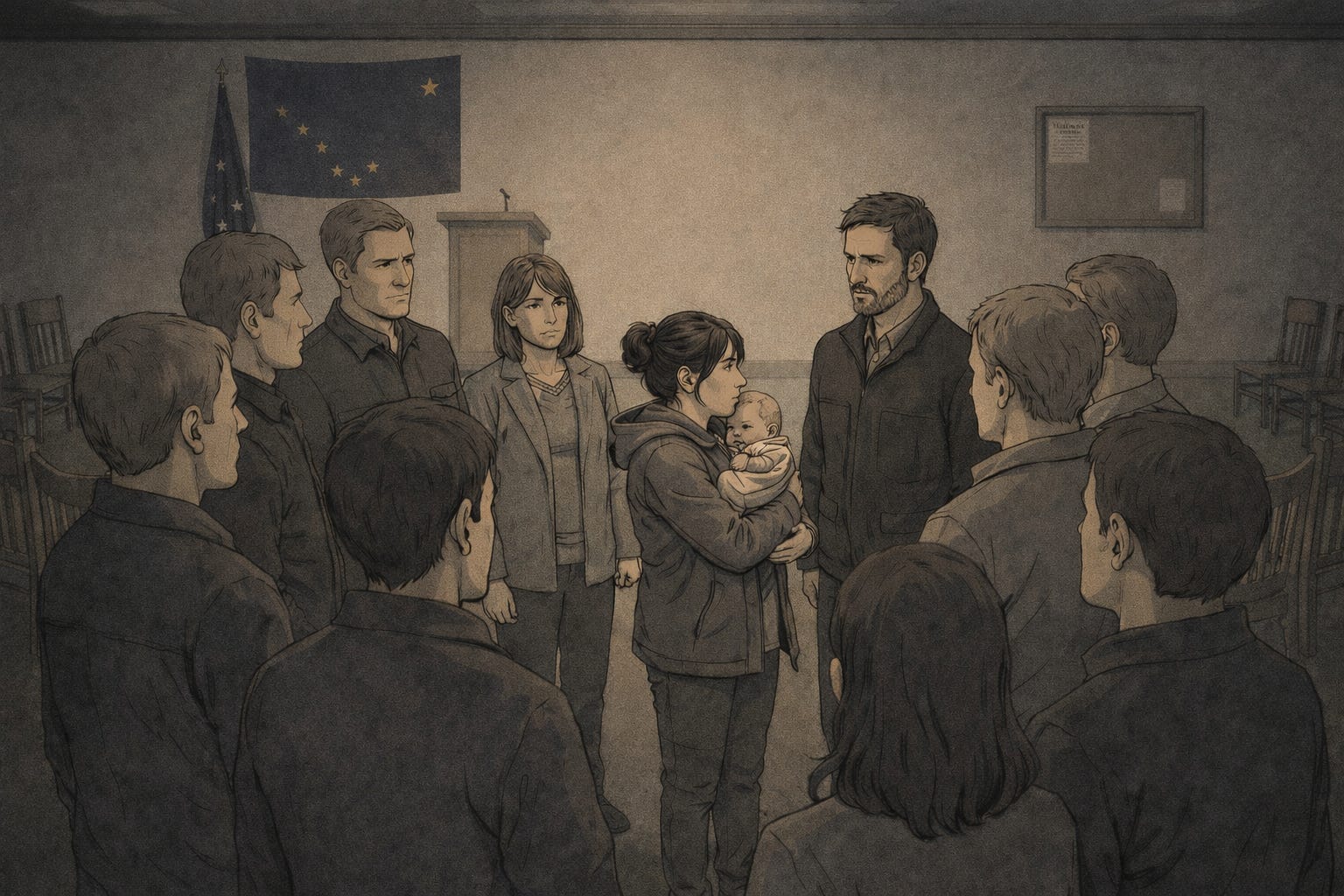
The mother clutched the child tighter.
No one stepped forward. No one intervened.
“Please—” she said.
“You have kept this condition hidden while continuing to nurse for seven months.”
“How many infants are there currently?” he asked.
“Four,” a woman answered.
He nodded once.
“That is four children you have diverted resources from.”
Not accusation. Accounting.
“Each of those mothers will receive a fifth of your rations for the next seven months. And you will nurse their children.”
The mother broke, quiet, contained.
Still no one moved.
Two men stepped forward and took the child. Efficient. No force needed.
The mother didn’t fight. She knew the outcome.
“Please—”
No response.
The child was removed from the room.
Gone.
He looked back to her.
“You knew the consequences and you chose to do it anyway.”
Not dramatic. Just final.
She recoiled slightly, her hand instinctively moving toward her mouth—
A hand clamped over it. Firm. Controlled.
“Don’t,” Russ said.
She froze.
“Do not scream.”
He slowly removed his hand.
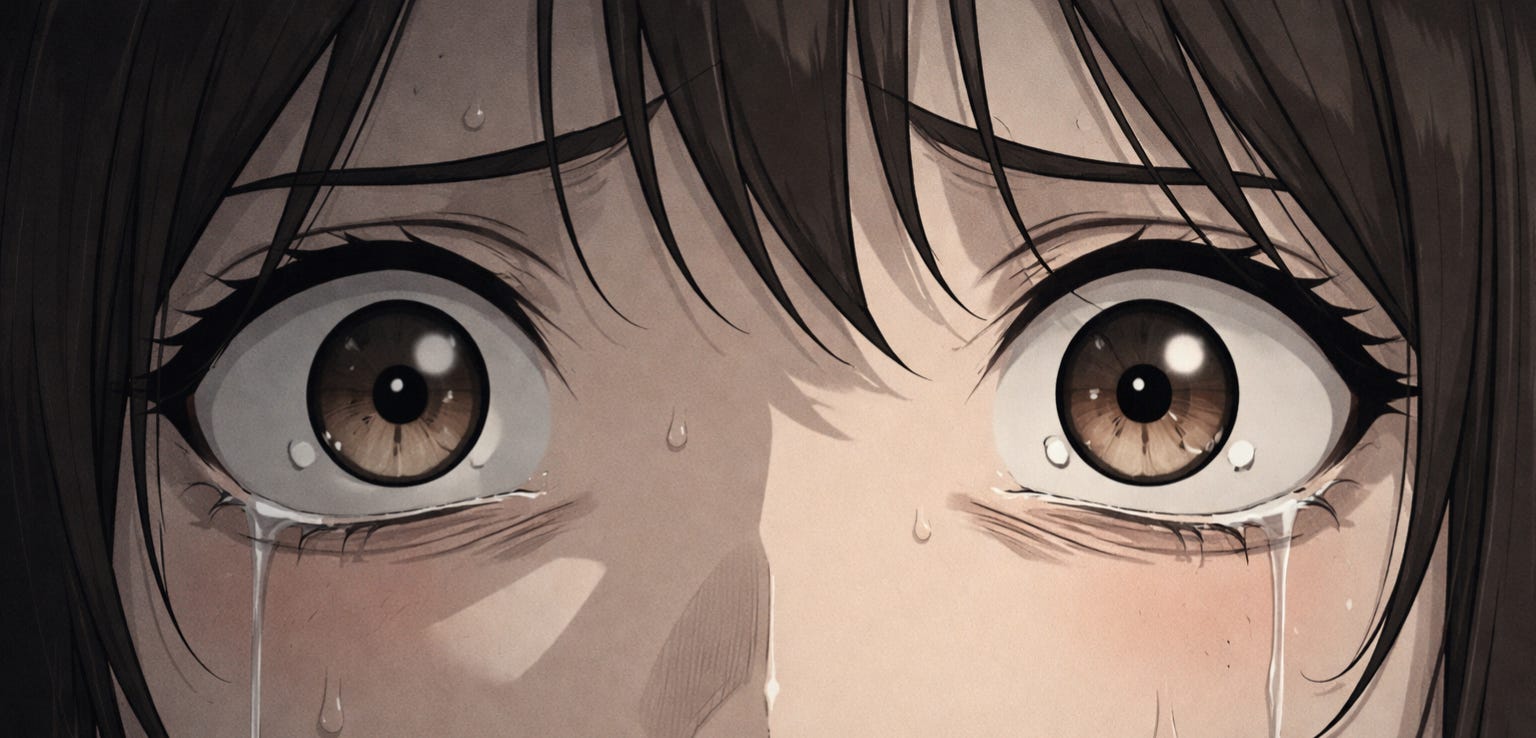
She exhaled sharply, but kept it quiet, and turned to him, eyes wide.
He didn’t look at her yet. He just watched the window.
They moved away from the building, quick but not running, controlled.
“What the hell was that—” she started.
“Not right here,” he said.
Low. Immediate.
They kept moving.
No one stopped them. No one called out.
Because no one needed to.
They turned a corner and moved out of sight.
She finally stopped and turned to him.
“They took her baby.”
“Yeah.”
No emotion. Not because he didn’t feel. Because it didn’t change anything.
“That’s not—”
She stopped herself. Even she didn’t know how to finish that sentence here.
He looked at her now.
“You shouldn’t have been there.”
“Let’s go.”
He kept walking.
She stood there for half a second longer, then followed, because she didn’t know what else to do.
They reached his cabin.
He opened the door and stepped inside, and she followed. The door shut behind them, solid and final.
She paced immediately, energy contained but barely.
“What was that?” she asked.
No answer yet.
He moved past her, set his coat down, took off his gloves. Normal motions.
“They took her baby.”
“Yeah.”
She turned on him.
“You don’t get to just say that like it’s—”
She cut herself off, because he already had.
“What is this place?” she asked.
He leaned against the table, thinking. Not how to explain. How much.
“It’s a town.”
That was what he gave first.
She stared at him.
“No.”
“No, it’s not.”
Silence.
He exhaled slowly.
“For most of the people here, it works.”
That landed.
“Works?”
“People here don’t waste anything.”
“Food. Time. Effort.”
He looked at her.
“People view it as survival of the fittest.”
That was the line.
She absorbed it, didn’t want to.
“That’s not survival.”
“It’s how people here survive.”
No argument. Just reality.
She shook her head, trying to reject it.
“That baby—”
“Wasn’t going to make it.”
Flat.
“You don’t know that.”
“Yeah.”
“They do.”
That was worse.
She turned away and ran a hand through her hair.
“And everyone just… goes along with it?”
“Everyone’s alive.”
“That’s the deal.”
She turned back, eyes sharper now.
“And you?”
A pause.
He considered the question.
“I don’t make the rules.”
“But you follow them.”
“I keep my head down.”
That was his answer.
She studied him, really looked at him now.
“What happened to your eye?” she asked.
A long pause.
He didn’t answer right away.
“Born like that.”
Simple.
“And they just… let you stay?”
A flicker of something.
“No.”
He reached up and tapped the scar above the patch.
“My mom did that.”
She didn’t follow at first.
Then it clicked.
“She hurt you?”
“Made it look like an accident.”
“Bear.”
He shrugged slightly, like it was just a fact.
“A teenager that can survive a bear has more value than a child born with a defective eye.”
She stared at him.
That landed harder than anything else so far.
“Ms. Crawford.”
He looked at her.
“Yeah.”
“She tried to leave.”
Not a question.
“Yeah.”
“And they—”
She couldn’t quite say it.
“Took her jacket. Took her pack.”
“Left her out there.”
Silence. Heavy.
“So that’s it?”
Her voice cracked slightly now.
“You see something you’re not supposed to and—”
“You don’t leave.”
That was the rule.
She backed up a step. The room felt smaller.
“There has to be a way out.”
“There is.”
“Plane.”
She looked up.
Hope, brief.
“Not without them knowing.”
Gone.
“Roads don’t get you far. They end on the outskirts of town.”
“Mountains.”
That one sat.
“You’ve done it?” she asked.
“No.”
“Why not?”
A pause.
He looked at her.
“I live here.”
That was it.
She processed fast now. Too fast.
“If I stay—”
She stopped, because she already knew.
“You stay.”
He didn’t soften it.
Silence.
She stood there as everything recalibrated. The town. The kids. The rules. Herself.
“And if I don’t?” she asked.
A long moment of tension hung in the air.
He looked at her, really looked.
“Then you better not get caught. And just know at this point you’re always being watched.”
“If you leave, you won’t get far before someone sees you.”
That was the closest thing to advice he’d given.
She held that.
Then a small nod.
A decision forming.
Not spoken.
Not yet.
He saw it anyway.
He didn’t react.
Because he’d seen it before.
Part 5
She walked through town along the same path as before. The same buildings. The same spacing.
But now, conversations stopped as she passed. Not abruptly. They just tapered off, like someone lowering the volume.
She clocked it this time and kept walking.
A man stacking wood glanced up and held eye contact a second longer than necessary, then went back to work. Too deliberate.
Two women stood near a doorway mid-conversation. They stopped as she approached, watched her pass, and didn’t resume.
She kept moving, posture unchanged, but her awareness was different now. She wasn’t part of the environment anymore. She was being tracked inside it.
At the edge of town, she slowed slightly and looked back. No one was following.
But movement resumed behind her, like a system resetting once she exited it.
She turned forward again and continued.
She entered the schoolhouse.
Thirteen students sat waiting, the same as always.
But something was off.
She set her things down and turned.
“Morning,” she said.
A few responses came back, quieter than before. Not shy. Measured.
Later, mid-lesson, she wrote on the board and turned.
No hands raised. No hesitation. Just stillness.
“Anyone?” she asked.
No one answered.
She tried again.
“Let’s say you could go anywhere.”
No reaction.
“Anywhere outside the town.”
A long pause.
“Why?” a boy asked.
Not curious. Literal.
She searched for an answer.
“To see something different.”
The boy considered that.
“We don’t need to.”
A few nods.
That was the consensus.
She moved between the desks again, slower this time, watching them.
They were watching her back now. Not openly. But consistently. Tracking.
“What do you want to learn?” she asked.
A pause.
“I want to take care of animals,” a girl said.
“So why don’t you?” she asked.
“We don’t learn that here.”
There it was. Clean. Learned.
She stopped walking and looked at the room. Really looked.
Thirteen kids.
No curiosity. No deviation. No future outside this place.
Just function.
The moment stretched longer than it should.
They didn’t break it. They waited for her to continue. For her to teach.
Something shifted in her.
Not panic. Not fear.
Clarity.
She turned back to the board and stared at what she had written. Math. Reading. Pieces of a life that didn’t exist here.
She set the chalk down slowly and turned back to them.
They were still watching. Waiting.
She understood now. Not abstractly. Not emotionally. Practically.
She wasn’t teaching them anything new.
She was helping maintain the system.
Reinforcing it.
She nodded once to herself.
Decision made.
“Alright.”
She picked the chalk back up and continued the lesson like nothing had changed.
But everything had.
That night, the cabin was quiet. The stove burned low.
She moved with purpose now, not restless, focused.
She pulled open a drawer. Inside were old papers and a few utensils. Nothing useful.
She checked another.
Then she found a small, worn notebook.
She paused and picked it up. Dust covered the surface. No name on the front.
She opened it.
Handwriting. Tight. Controlled.
She flipped through pages of notes, repetitive.
“Stick to curriculum.”
“Do not interfere.”
“They don’t want deviation.”
She flipped faster, more frantic now.
“They’re not teaching them to leave.”
“They’re preparing them to stay.”
A page pressed harder into the paper.
“Resources. That’s all they see.”
She stopped.
Another page. Different ink. Darker. The pen had dug into the paper.
“Quarterly Activity.”
She read.
“First year: simple counts. Beans. Nails. Cans. Showed them how to total what we have against what we’ll need.”
Below it:
“Second year: bodies instead of cans.”
More lines, the handwriting starting to tilt.
“Explained ‘capacity.’ Tried to keep it abstract.”
“They already knew who slows the line. Who eats more than they carry.”
Her eyes moved down.
“They call it a privilege to be chosen to help. I told them it was a lesson in responsibility.”
“They smiled.”
A section underlined twice:
“Q4: take them to the markers at the tree line.”
“‘They should see what happens when the numbers don’t work,’ the Mayor said.”
One last note on the page, the letters cramped, pressed hard enough to ripple the paper:
“They want me to let the class decide this time.”
Her fingers tightened on the notebook.
She turned another page.
“I asked the wrong questions.”
“This quarter, they want answers from them.”
She closed the notebook.
Not shocked.
Confirmed.
She set it down and sat, still.
The next day, in the schoolhouse, she stood at the board mid-lesson, wrote, and turned.
Twelve students.
One desk empty.
She saw it immediately and didn’t react.
She continued.
“Open your books,” she said.
Pages turned.
Normal.
Too normal.
Her eyes drifted to the empty desk. The girl’s desk. The one who wanted to take care of animals.
No one looked at it. No one acknowledged it.
She looked back to the class.
They were watching her again. Waiting. Tracking.
“Are we doing another list this quarter?” a boy asked.
She froze for just a second.
“What list?” she asked.
The boy shrugged.
“Like last time. When we wrote down who slows the group.”
A couple of kids nodded.
Matter of fact.
Nothing more.
She held their faces for a moment.
“Open to page thirty two.”
She turned back to the board and continued the lesson like nothing was missing.
She sat in Principal Stark’s office.
“It’s not complicated,” he said.
She sat still.
“You were given a curriculum.”
“I followed it.”
“You added to it.”
“Questions outside scope.”
“They were basic questions.”
“They weren’t necessary.”
A pause.
“They didn’t know what a map was.”
“They don’t need to.”
He said it simply. No edge. Just fact.
“You’re here to teach what’s relevant.”
“Relevant to what?”
He frowned slightly, not defensive, just confused why that wasn’t clear.
“To their lives.”
“You’re overextending.”
Softer now.
“That happens sometimes.”
Like he’d seen this before.
“You’ll settle in.”
Silence.
“Right.”
“Stick to the material.”
That was it.
No threat. No warning.
Just correction.
She entered the schoolhouse a fraction slower than usual. Not dramatic. But off.
The room reacted the same way it always did. Stillness. Twelve sets of eyes. Watching. Waiting.
She set her things down, her hand lingering on the desk a second longer than it should.
Then she sat and opened the drawer.
Inside was a stack of papers.
One sat on top.
Stamped: REQUIRED.
She looked at it.
Didn’t touch it yet.
A breath.
Then she took it out and stood.
The room remained silent.
“We’re doing something different today,” she said.
No reaction. Not curiosity. Just attention.
She looked down at the paper, reading it once even though she already knew what it said.
“This is a… group activity.”
“You’ll be evaluating each other.”
The shift was immediate.
Not fear. Not confusion.
Engagement.
Students began to move, subtle at first, chairs adjusting, bodies turning.
Alive in a way they hadn’t been.
She saw it.
It landed.
“You’ll assign value based on contribution.”
She swallowed slightly and continued anyway.
“Work output. Efficiency. Resource use.”
The language felt wrong in her mouth.
But she didn’t stop.
The students were already grouping, small clusters forming naturally.
No instruction needed.
They had done this before.
“Do we start with highest or lowest?” a student asked.
“Highest,” another said immediately.
A few nods.
Agreement.
A girl pulled her desk closer to another.
Papers were already being divided.
Systematic. Ordered. Eager.
She stood at the front of the room, still holding the sheet, watching, listening.
“He slows the group down,” one student said.
“Only on longer tasks,” another replied.
“That still counts.”
A pause.
Then they wrote.
No hesitation.
Across the room—
“She works steady,” a girl said.
“Not fast,” a boy added.
“But consistent.”
They considered that.
Then marked something down.
No emotion. No cruelty.
Just assessment.
Her grip tightened slightly on the paper.
A quiet inhale.
No one looked at her anymore.
They didn’t need her.
The system was running.
On its own.
A boy raised his hand, then stopped, realized, and lowered it.
He didn’t need permission.
He just continued.
She watched that.
That was the moment.
The last piece.
“Everyone participates,” she said quietly.
It came out automatic. Learned.
A girl across the room looked up, not at her, but at another student who hadn’t started writing yet.
“You need to contribute,” she said.
Not harsh. Not aggressive. Just correct.
The student nodded and began.
She exhaled, barely.
Her eyes moved across the room.
Twelve children.
Functioning.
Aligned.
No deviation.
No resistance.
Exactly as designed.
She lowered the paper, just slightly.
Her hand trembled once, then stopped.
She stood at the front of the room.
Teacher.
Overseeing.
The thing she now understood.
And was part of.
Part 6
That night, the cabin was dark. Only the stove gave off a low, fading glow.
She sat at the table, still.
Not thinking anymore.
Decided.
She stood and moved with purpose. No wasted motion.
She opened her pack and laid items out carefully, methodically.
Extra layers. Headlamp. Ice axe. Crampons. Food, minimal. Water.
Everything had a place.
Everything had a reason.
She paused, looked at one item in her hand, hesitated, then put it back.
Too heavy.
She closed the pack, tightened it, checked the straps.
No second-guessing.
She moved to the table.
The contract sat there.
She looked at it.
Then flipped it over.
Face down.
Done with it.
She stepped outside into the night and closed the door quietly behind her.
She didn’t lock it.
She paused and listened.
Nothing.
Just wind through trees.
She started walking, not fast, not slow, deliberate.
At the tree line, she stopped and looked back at the town.
Dim lights. Still. Distant.
Then she turned away and entered the trees.
Her headlamp clicked on, a narrow beam cutting through the darkness.
She moved through the terrain with confidence, careful footing, controlled breathing.
This was her environment.
A faint sound—
She stopped and listened.
Nothing.
Or something too far to place.
She kept moving.
She adjusted her pack slightly.
The strap sat perfectly, like it had been set for her.
A small detail.
Easy to miss.
The terrain shifted as she approached the ridge, steeper, colder. The wind picked up slightly.
She slowed, calculating each step.
She planted her foot, checked it, moved.
Efficient. Trained.
Another faint sound.
Behind her.
Or above.
She stopped again and listened, longer this time.
Nothing visible.
But something felt different.
She turned her headlamp off.
Darkness swallowed everything.
She waited.
Breathing steady.
Then the headlamp clicked back on.
She kept moving.
Faster now.
Not panicked.
But aware.
She reached higher terrain where the ground opened up and the wind cut harder. She leaned into it and kept moving.
Her pace increased slightly. She was committing now. Distance mattered.
Behind her, far off, a faint mechanical sound drifted through the wind. Barely audible. It could have been the wind. It could have been something else.
She didn’t look back.
She just moved.
She climbed the slope, controlled and focused.
For a moment, it felt like she might make it.
She kept climbing, her breathing heavier now but still controlled, still moving.
A sound.
Low at first. Distant.
Then clearer.
A mechanical hum.
Unnatural against the wind.
She stopped and listened.
There it was again.
Not random.
Her eyes shifted, calculating distance and direction.
The sound grew. Not rushed. Steady.
Snowmobiles.
She didn’t panic. Didn’t run blindly.
She moved.
Faster now. More direct.
She crested the ridge line, wind hitting harder as visibility dropped.
The sound split. More than one.
Coming from different angles.
She stopped, just for a second.
That was all it took to understand.
She wasn’t being chased.
She was being closed in on.
She turned, changed direction, picked a line, and moved.
Her headlamp cut across open snow.
No cover. Just distance.
The first light appeared far off.
Then another.
Then another.
They didn’t rush her.
They adjusted.
Matching her movement.
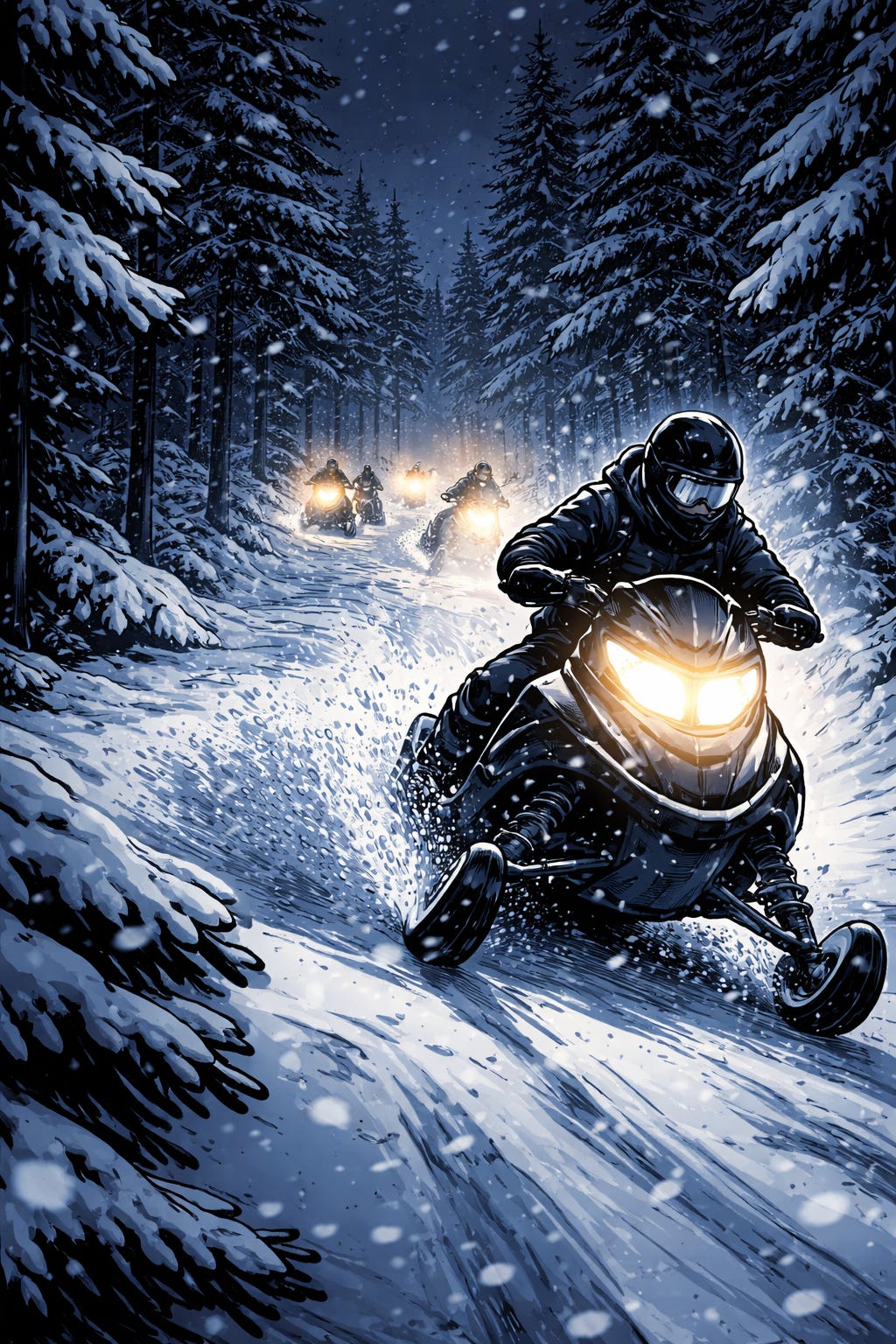
The sound grew louder. Closer. Not chaotic. Controlled.
She pushed harder. Her footing less precise now, fatigue starting to show.
A misstep.
She stumbled, caught herself, and kept going.
Too late.
A snowmobile cut across her path, not fast, just enough to block.
Another behind her.
Then another.
Engines idled.
Surrounding.
She stopped.
Not because she wanted to.
Because there was nowhere to go.
Three men were already dismounted. No weapons drawn. They didn’t need them.
Her breathing was sharp now, controlled but breaking.
She looked for an opening.
There wasn’t one.
One of the men stepped forward. Not aggressive. Just moving.
He took her arm, firm.
She pulled once, reflex, not a fight.
He tightened his grip.
That was enough.
They didn’t speak at first.
They didn’t need to.
Another man moved behind her, unclipped her pack, and slid it off. Efficient. No struggle.
The first man released her arm only to take her jacket.
She resisted slightly, a small pull back.
He didn’t react.
He just took it.
Another removed her gloves, one at a time.
Quick. Practiced.
The cold hit immediately.
Sharp.
Immediate.
She stood there, breathing, exposed.
The man who took her jacket looked at her.
“You shouldn’t have run,” he said.
Nothing else followed.
They stepped back and returned to their machines.
No hesitation.
No lingering.
Engines started, one by one.
They didn’t look back.
They didn’t check on her.
They didn’t need to.
They left.
Lights faded into the distance.
Sound followed.
Then disappeared.
Silence returned.
Wind.
She stood alone in the open snow, her breath visible, her hands already starting to stiffen.
She looked around.
Nothing.
No one.
She exhaled, sharp and controlled.
Still alive.
For now.
She remained still at first.
Listening.
Wind.
Nothing else.
Her breathing slowed, forcing itself steady.
In.
Out.
Measured.
She looked down at her hands and flexed her fingers.
Limited response.
Time was already working against her.
She turned slightly, scanning.
Not for them.
For something else.
Then she moved.
She climbed again, bare hands against the snow, boots finding purchase.
Slower now.
More deliberate.
No wasted energy.
No panic.
Just movement.
She kept her head low, protecting what heat she could.
Her breath tight and controlled.
The wind shifted.
A slight break in the sound.
She stopped.
Listened.
Nothing.
Or something quieter.
Something intentional.
She adjusted her direction, subtle, like she already knew where she was going.
She crested another ridge.
A shape stood there.
Still.
Waiting.
Russ.
Standing in the dark, a down jacket in his hand, her real pack at his feet.
She stopped, just for a second.
Not surprised.
Not relieved.
Confirming.
He stepped forward and handed her the jacket.
“Put it on.”
She did. Immediately. No hesitation.
He handed her the pack, straps already adjusted exactly how she had them.
Or better.
She slipped it on, tightened once, checked.
Good.
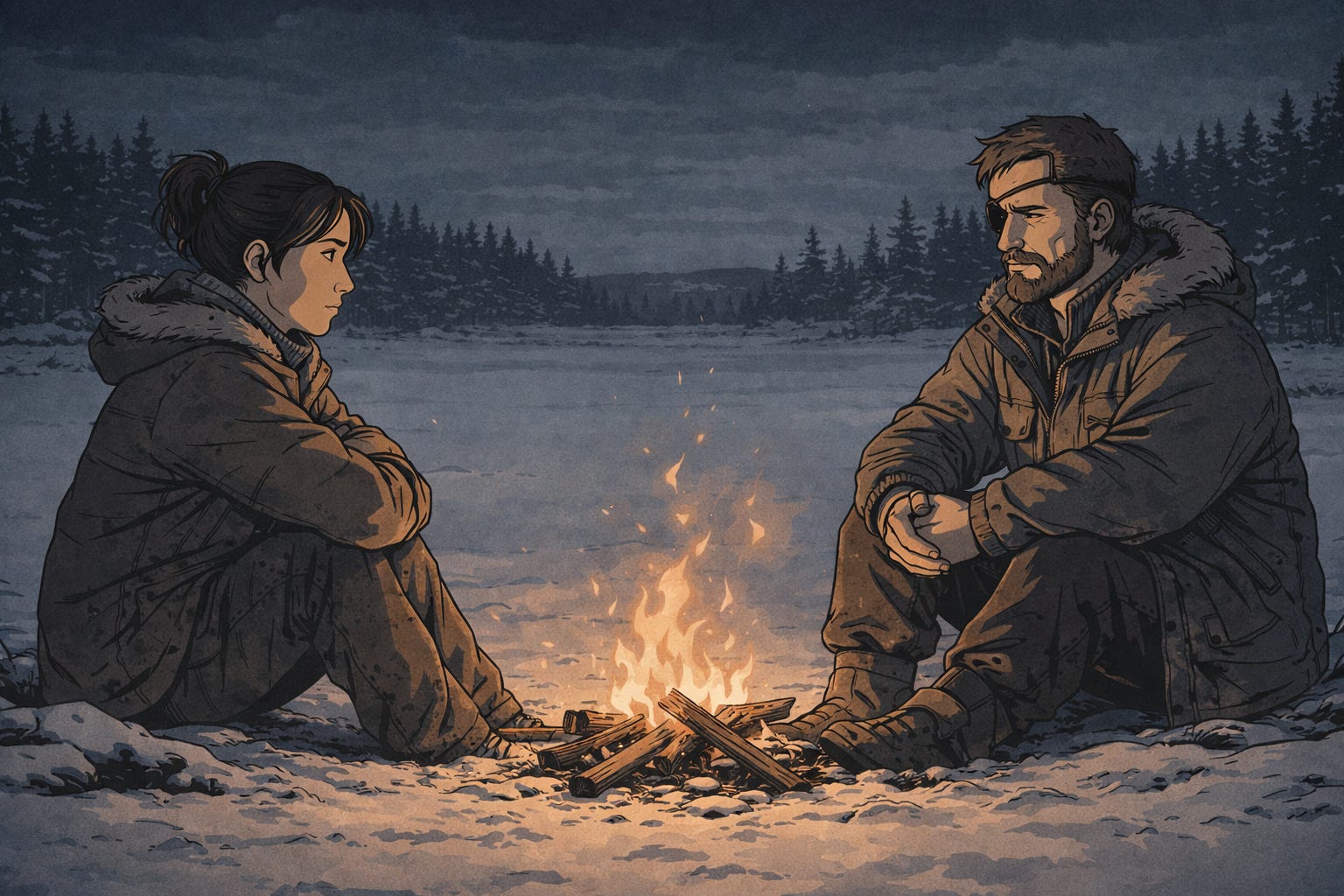
He led her to a small clearing where a fire burned low.
She held her hands over it, letting the heat return.
“Thank you,” she said.
Not accusatory. Just fact.
“Yeah. As long as they think you’re dead,” he said.
“They don’t change it.”
“Change what?” she asked.
“How they do things.”
He looked back toward the direction of the town.
Not worried.
Certain.
She absorbed that.
“And you just—”
She stopped.
Didn’t finish it.
He didn’t help her.
“Keep my mouth shut and you don’t give them a reason to think you survived,” he said.
Wind cut across the ridge edge as she stood with her jacket on and her pack secured. Russ stood a few steps away. Neither of them moved.
“They do this to everyone?” she asked.
“If they need to,” he said.
“And it always works?” she asked.
“Yeah.”
No hesitation.
“They always do it this way. That’s the system.”
She looked back the way she came.
Nothing visible.
Just dark and distance.
“You don’t stop it,” she said.
Not accusing. Clarifying.
“No.”
“I don’t interfere.”
The same language as the contract. Intentional.
“But you helped me.”
“You actually have the skills that might get you out of here.”
He let that sit.
“I worked around it. That’s the difference.”
The wind pushed through again, colder now.
She looked between two directions.
Behind her, the town.
Ahead, the mountains.
Both quiet.
Both waiting.
“You go back—” he said.
“You keep your head down.”
“And that’s it?” she asked.
“That’s it.”
No hidden clause. No second layer.
“They’ll trust me?” she asked.
“If you don’t make them notice you.”
“You’ll eat. You’ll work. You’ll stay.”
He didn’t say anything else.
He didn’t need to.
Part 7
She turned and looked toward the mountains. Wind rolled over the ridgeline, unforgiving.
“Other way—” he said.
“You’re on your own.”
“I already am.”
That landed.
A long silence followed.
No push.
No persuasion.
Just space.
He watched her. Not trying to read her. Just waiting.
She adjusted her pack slightly, checked the strap.
Set.
She nodded once.
Not to him.
To herself.
“I’m not going back.”
Simple.
Final.
He didn’t react.
Because he already knew.
“Then don’t stop.”
“Once you start, you don’t stop.”
That was the only instruction he gave.
She turned and faced the mountains fully.
No hesitation.
She stepped forward.
Her headlamp clicked on, a narrow beam cutting ahead as she moved into the dark.
Behind her, Russ remained where he was, still, part of the system. Not following. Not calling out.
She kept moving.
She didn’t look back.
The distance grew between her and everything she was leaving behind.
She continued the ascent without pause.
She didn’t glance back. She didn’t check the sky. Her focus remained forward, on the immediate terrain.
She refused to look for a peak.
She just moved.
Step.
Plant.
Shift.
Step.
No final push. No visible goal.
Only more white.
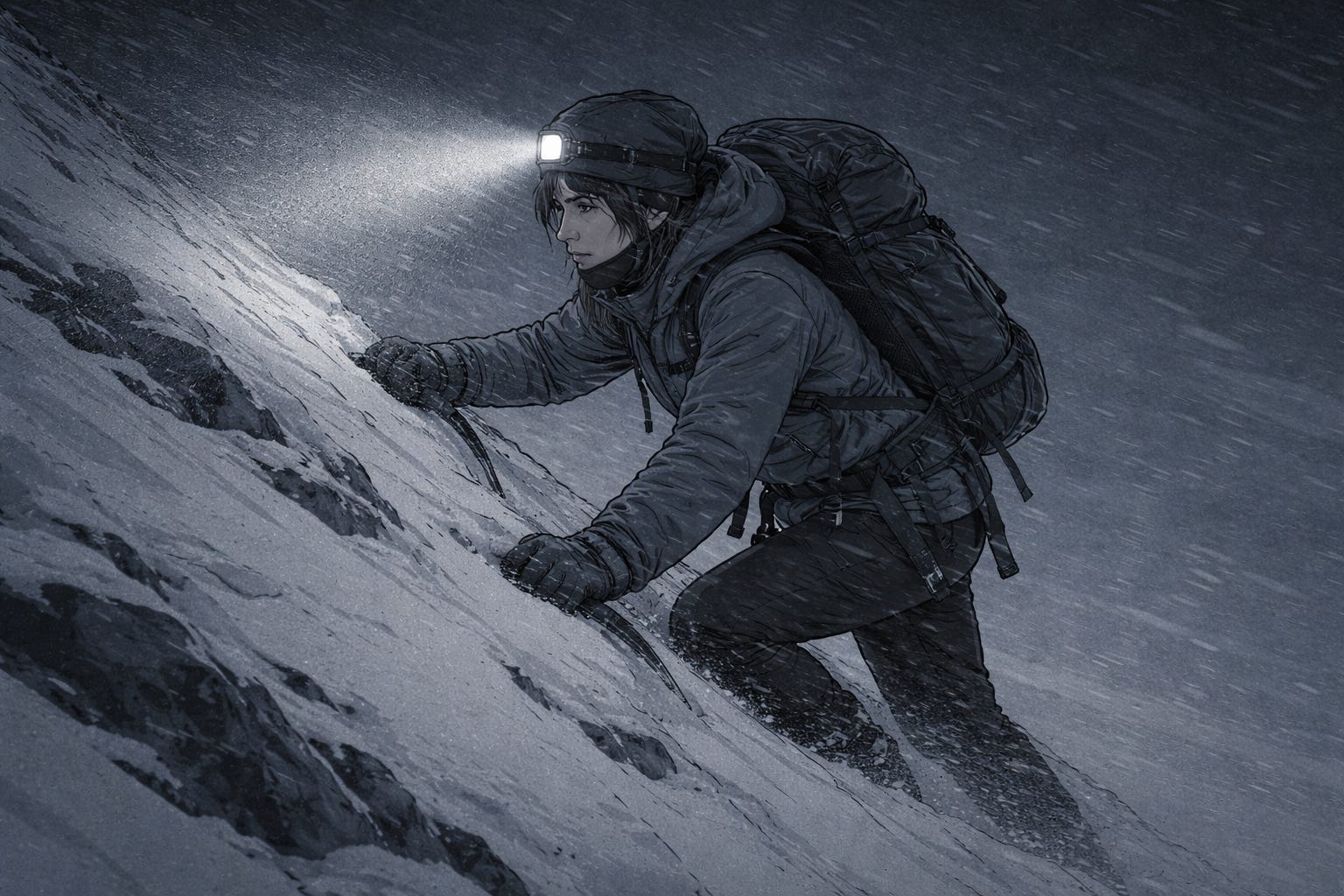
The terrain shifted beneath her, less consistent now. Wind-packed crust that might hold. Softer pockets that might not.
Her foot placement became more deliberate.
Test.
Wait a fraction too long.
Commit.
Occasional shallow give under her weight sent a quick drop through her stomach before she corrected.
The wind built as she climbed, not in gusts but as a steady pressure, like hands pushing against her.
A slight lateral shove forced constant balance adjustment.
Her ice axe bit into the surface before she slipped.
Metal into ice.
The sound swallowed instantly.
Her breathing grew heavier now, controlled but edged with something she wouldn’t admit.
Her shoulders tightened under the pack, straps cutting in.
Her steps shortened.
Efficiency over speed.
Survival over distance.
She didn’t stop.
She knew what happened if she stopped.
Her fingers slowed, glove fabric stiffening as sensation dulled.
Her grip adjusted again and again, searching for strength that wasn’t fully there.
She didn’t pause to recover.
She kept moving while pieces of her stopped responding.
The ridge repeated itself.
Every rise looked like the last.
Ridge led to slope.
Slope led to a pale horizon.
The horizon never got closer.
Distance remained undefined.
Only the knowledge of how far she needed to be from them.
She maintained her direction.
No hesitation.
No deviation.
Trusting that away was enough.
Her rhythm held.
Step.
Plant.
Shift.
Step.
No break.
No change.
No permission to rest.
She kept going.
Part 8
After the glissade, she kept moving.
No pause to celebrate not dying.
Each step controlled. Each placement deliberate.
Every misstep a possible last one.
The terrain shifted unpredictably beneath her.
Hard plates rang underfoot.
Soft collapses swallowed her ankles.
She adjusted constantly, hips, knees, spine all negotiating with gravity.
Her breathing was now fully audible, thin, scraping pulls of air.
Managed.
But close.
Her shoulders clamped around the pack as if letting it slip even an inch meant freezing where she fell.
A delay crept between steps.
A micro hesitation.
Then she forced the next one anyway.
No stopping.
Stopping was waiting.
Waiting was being found.
Uneven ground forced a wider stance.
Her legs braced against a shove that might come.
Minor stumbles caught her toes.
Her ankles twisted and recovered before pain could register.
She used the ice axe intermittently.
Stab.
Drag.
Anchor against what she couldn’t see.
Her fingers remained stiff, commands delayed, then ignored.
Her grip faltered once, the axe threatening to slip.
She clamped down hard enough to hurt.
She didn’t try to warm them.
Time was warmer than skin.
She spent it moving.
The ground continued without markers.
No tracks.
No familiar trees.
No visible sense of progress.
Only the knowledge that the town was somewhere behind her.
Direction held by intent alone.
A compass of fear.
A bearing set to anywhere else.
Her pace slowed, not by choice but by failing muscles.
Each step required effort now.
A decision instead of a reflex.
Movement became mechanical.
Step.
Plant.
Shift.
Step.
A body moving because it refused to stop.
Snow coverage thinned.
Dirty edges appeared.
Patches of ground showed through.
More exposed earth and ice.
Footing demanded more attention.
Each step could roll, slip, or hold.
Energy output spiked as she dragged the last of her reserves forward.
She stepped off the snow onto packed ground.
The footing changed.
Less give.
Less threat of disappearance.
She didn’t react.
No relief.
No visible claim of safety.
She kept moving.
As if the mountain hadn’t ended yet.
Exterior lights appeared ahead.
Warm.
Unnatural after the white.
Inside, people moved slowly, easily.
No urgency.
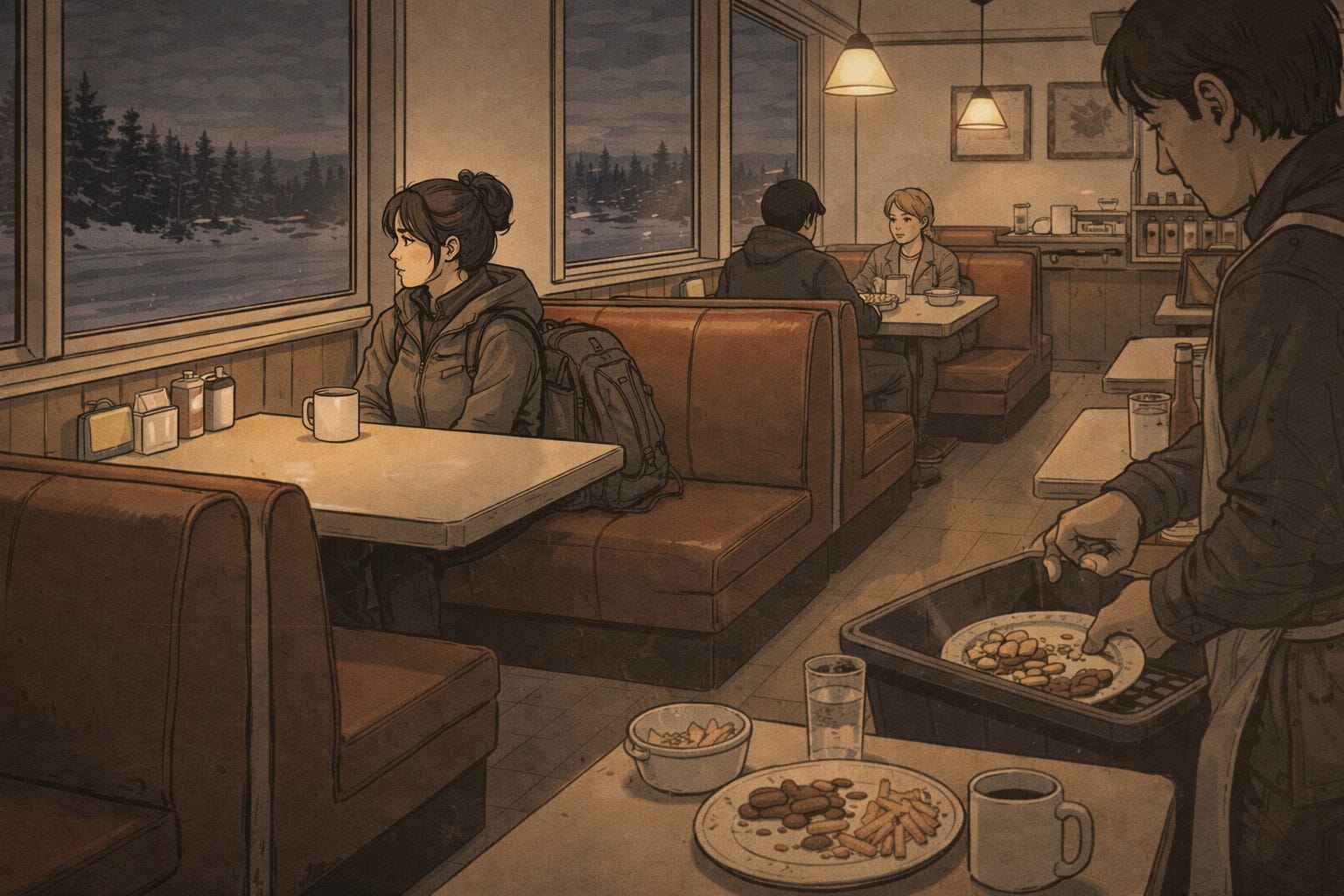
She paused at the diner door.
Not hesitation.
A body bracing for a different kind of cold.
The door opened and a bell chimed.
She stepped inside.
Warm light.
Steady.
Unthreatening.
Voices.
Utensils.
Movement without urgency.
A few heads turned, assessed her in a glance, then looked away.
She was no one.
She moved to a booth, set her pack down carefully, and sat.
Back to the wall.
View of the door.
Automatic.
She picked up the menu and flipped it open.
Pages full.
Options.
Variety.
Food without justification.
Her eyes moved across it.
Not hungry.
Calculating.
A server passed behind her carrying a bus tub filled with half-eaten plates.
Meat left untouched.
Bread torn and abandoned.
A bowl still half full.
The server dumped it into a bin.
Food hit plastic.
Soft.
Wet.
Final.
Her eyes flicked to it for just a second.
No visible reaction.
But something tightened.
She looked back to the menu.
Tried to continue reading.
Didn’t.
She set it down.
A waitress approached.
“Anything to drink, Hun?” she asked.
She looked up.
Faces that weren’t measuring her.
A different kind of unfamiliar.
“Water,” she said.
The waitress nodded, wrote it down, and moved on.
No questions.
No expectations.
No system to satisfy.
She sat in the booth, her hands still slightly curled like she was holding something that wasn’t there anymore.
Around her, laughter.
Conversation.
Food no one had to earn.
She didn’t join it.
Didn’t reject it.
She just existed inside it.
Teaser:
You ignore the call.
You avoid the confrontation.
You hesitate.
Something else doesn’t.
SECOND SELF
Charlie has spent his life stepping back.
Letting things go.
Letting people talk over him.
Letting opportunities pass.
Then one night—
He looks in the mirror.
And it looks back.
The next morning, everything changes.
Not for him.
For everyone else.
His life starts improving.
Without him.
Deadlines met.
Boundaries enforced.
People… dealt with.
Now Charlie is trapped in a world that doesn’t recognize him—
While something wearing his face builds the life he never could.
And it’s not making mistakes.
Parts 1–2 drop April 10
Parts 3–5 drop April 17